
How Mesa's Historic Fitch Farm Became Your Neighborhood
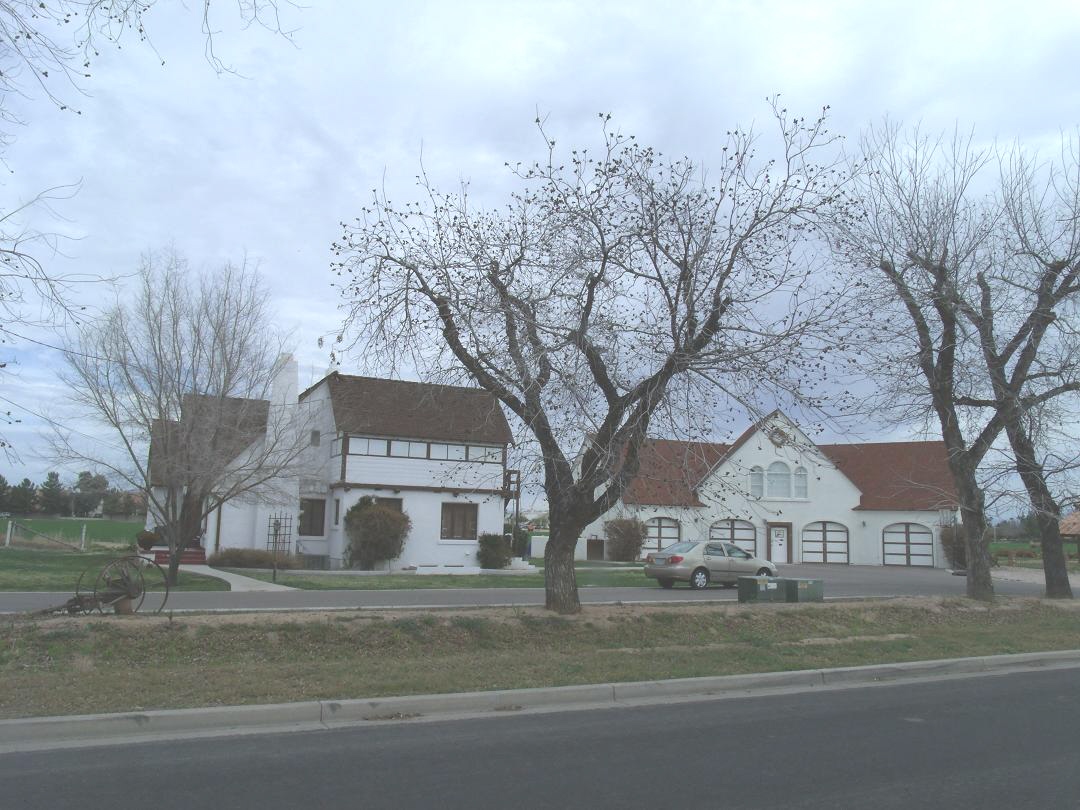
The Fitch Farm used to be the reason North Center Street existed. Built in 1933 by Larkin Fitch, that single property sprawled across more than 400 acres of what is now residential, commercial, and industrial Mesa. Today, almost nothing of it remains. Understanding what happened to the Fitch Farm is the fastest way to understand how zoning actually works in Mesa, and why some neighborhoods have the character they do.
Mesa didn't start as a planned city with neat zoning grids. It grew by absorbing farms and ranches, rezoning them piece by piece as the city expanded east and north. The Fitch Farm is a textbook example of that conversion, and it's still shaping property values and development patterns on the north side today.
What the Fitch Farm Actually Was
The Fitch Farm House was built in 1933-34 on what became one of Mesa's largest agricultural holdings. Over 400 acres of irrigated farmland stretched along North Center Street, making it a serious operation for its time. Larkin Fitch wasn't running a hobby farm; this was commercial agriculture in the middle of what would become suburban Mesa.
That kind of land use doesn't survive urban expansion. As Mesa grew north and east from downtown in the 1970s and 1980s, the Fitch Farm sat directly in the path of residential development. The zoning had to change. It did.
How a Farm Becomes a Neighborhood
When a 400-acre farm gets rezoned from agricultural to residential, it doesn't happen all at once. Developers buy sections. Zoning adjustments come parcel by parcel. Some land gets commercial zoning for strip centers or office parks. Some becomes industrial. Most becomes single-family residential.
The Fitch Farm's conversion is why North Center Street today has that mixed character: you'll find older single-family homes built in the 1980s and 1990s next to commercial corridors and light industrial. That's not random. That's the footprint of a farm being carved up and rezoned over decades.
This matters because zoning decisions made 30 or 40 years ago are baked into your neighborhood's DNA. If you bought a home on the north side, the reason your street has the density it does, the reason there's a commercial strip a few blocks away, the reason some properties are older than others—all of it traces back to how the Fitch Farm was subdivided and rezoned.
What This Means for Mesa Homeowners
If you own property on the north side, especially anywhere between North Center and the older residential areas that surround it, you're living on converted farmland. That's not a bad thing. It's just a fact that shapes your options.
First, your property's zoning is unlikely to change drastically now. Most of the north side is already fully developed or committed to current use. The rezoning happened decades ago. You're not going to wake up to find your R-1 home rezoned commercial. That battle was fought and won (or lost, depending on your view) in the 1980s and 1990s.
Second, understanding the history of your area helps you predict what's coming. If you see vacant land nearby, you can check Mesa's zoning records to see what it's zoned for. If it's commercial or industrial, a strip center or warehouse is more likely than a new subdivision. If it's residential, you know what's coming.
Third, older neighborhoods built on converted farmland often have character that newer subdivisions don't. Larger lots, older trees, more established landscaping. That appeals to some buyers and not others. If you're selling, knowing your neighborhood's history helps you market it to the right audience.
The Bigger Picture: Mesa's Zoning Evolution
The Fitch Farm story is just one example of how Mesa transformed from a farming community to a suburban city. It happened to hundreds of properties across the valley. Each conversion tells a story about when Mesa was growing in that direction, what the city's priorities were, and what kind of development the market wanted.
Today, Mesa's growth is pushing south and east toward Queen Creek and San Tan Valley. The pattern is the same: agricultural zoning converts to residential and commercial. Understanding that pattern helps you see where property values are likely to appreciate and where neighborhoods are stabilizing.
What to Do Next
If you own property in north Mesa or are considering buying there, dig into your specific area's history. Check Mesa's Historic Properties Registry to see if your neighborhood has recorded historic sites or structures. It's a quick way to understand what your area looked like before it became residential.
Next, pull your property's zoning designation from Maricopa County parcel records. Search your address on the county assessor's website. Knowing whether you're zoned R-1, R-2, commercial, or mixed-use tells you what the city's long-term plans are for your area.
If you're thinking about selling, use our home value tool to see how your property stacks up against recent sales in your neighborhood. Older, established neighborhoods often command premiums that newer subdivisions don't.
Finally, if you have questions about your property's zoning, future development plans for your area, or what your home might be worth, book a 15-minute consultation with a licensed Arizona Realtor who works on the north side. Local knowledge beats guessing.
This is educational content, not legal advice. For specific zoning questions or property records, consult the City of Mesa Planning Department or a licensed Arizona Realtor.
Talk to a Local Agent
Get matched with an agent who knows your target area.