
First-Time Buyers in Mesa: Down Payment Help Actually Works
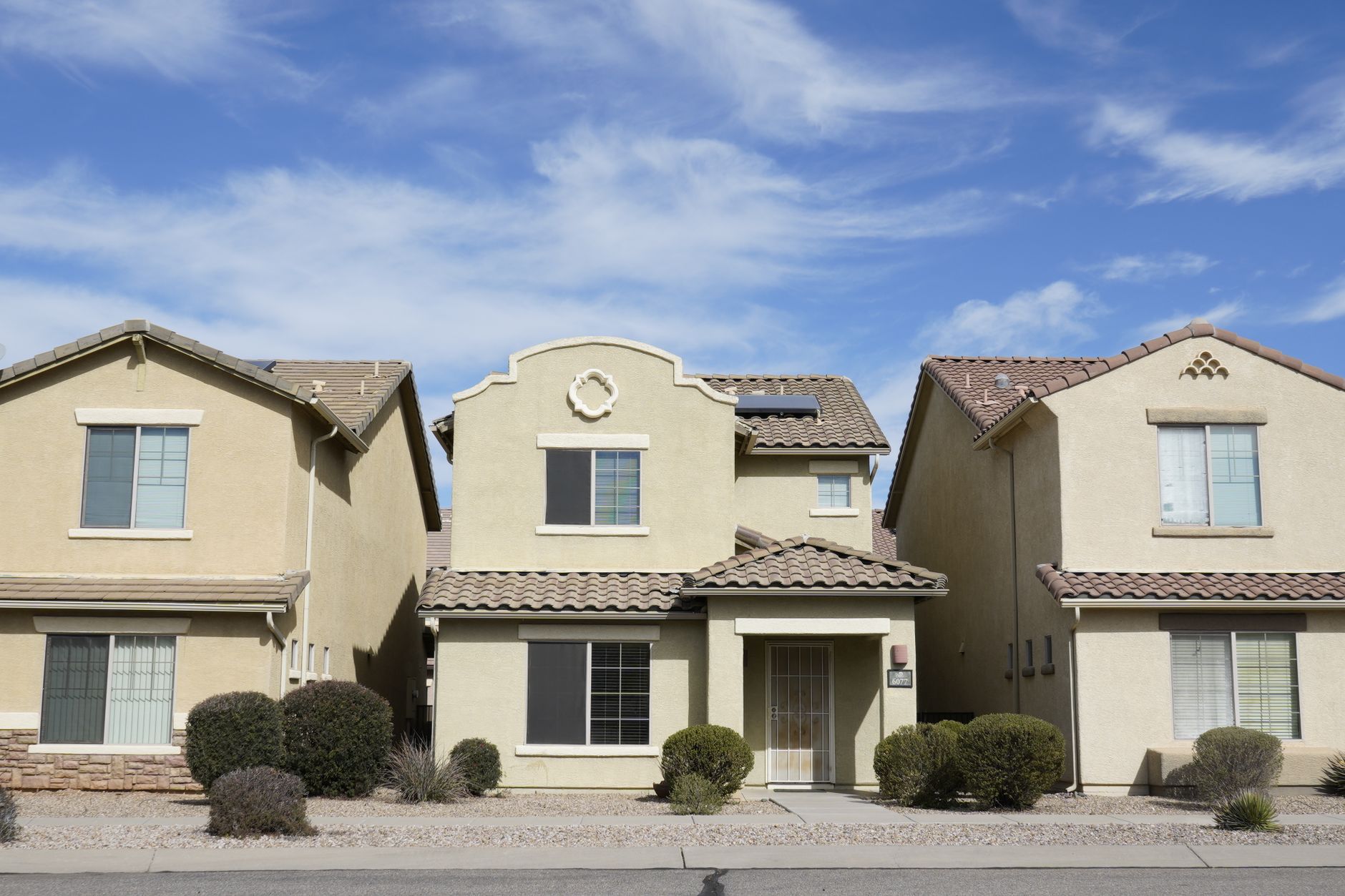
If you've been waiting on the sidelines in Mesa because you don't have 20% down, you're leaving money on the table. Down payment assistance programs are real, they're available now, and they're specifically designed to get first-time buyers into homes at rates that actually make sense.
The problem is most people don't know they exist, or they think they're too good to be true. They're not. Down payment assistance programs can help you afford your first home, even as mortgage rates continue to climb. That's not marketing copy. That's the reality for buyers in Mesa right now.
Why 20% Down Is a Myth
You've probably heard it a thousand times: you need 20% down to buy a home. On a $415,000 home in Mesa, that's $83,000 sitting in a bank account. For most people, that's not happening.
Here's the thing: lenders stopped requiring 20% down years ago. At a 6.51% mortgage rate, you can buy a $415K home with significantly less than that. The catch is you'll pay mortgage insurance (PMI) unless you hit that 20% threshold, or unless you use an assistance program that lets you skip it.
Assistance programs are the workaround. They come from state housing authorities, nonprofits, employers, and sometimes local governments. Some cover down payments. Some cover closing costs. Some do both. And they're not loans you have to pay back—they're grants.
What These Programs Actually Cover
Down payment assistance comes in a few flavors:
Grants: Money you don't repay. Arizona has state-level programs, and Maricopa County has county-level programs. Mesa buyers can access both.
Forgivable loans: You get a loan, but it disappears if you stay in the home for a set period (usually 5 to 10 years). If you sell or refinance before that, you pay it back. After the term ends, it's gone.
Employer programs: Some companies offer down payment help as a benefit. If you work for a larger employer in the East Valley, ask HR.
Community-specific programs: Some neighborhoods have programs tied to them. New construction developments sometimes offer incentives that function like assistance.
The New-Construction Angle
If you're open to new construction, there's another layer of help. A new-construction home gave buyers what resale couldn't: lower bills and a sense of community. That's not just marketing. New homes come with builder incentives, energy efficiency that cuts your monthly bills, and sometimes assistance packages built into the deal.
In Mesa, new construction is concentrated in Cadence, Eastmark, and emerging areas east of Signal Butte. Builders in those communities often have relationships with down payment assistance programs and can point you toward them.
What This Means for Mesa Buyers
Let's ground this in actual numbers. On a $415,000 home with a 6.51% rate, your principal and interest payment is around $2,650 per month before taxes, insurance, and PMI. With a 10% down payment ($41,500), you'd pay PMI of roughly $300 to $400 a month. That's $3,600 to $4,800 a year in extra cost.
If an assistance program covers that $41,500 down payment as a grant, you've eliminated PMI entirely. You're saving $300 to $400 a month from day one. Over a 30-year mortgage, that's $108,000 to $144,000 in your pocket.
The programs also help with closing costs, which run 2% to 5% of the purchase price on a $415K home. That's another $8,300 to $20,750. Assistance programs can cover that too.
For Mesa homeowners already in the market, this matters if you know someone trying to buy. Sending them toward these programs instead of telling them "you need 20% down" could be the difference between them buying now or waiting another three years.
How to Actually Qualify
Assistance programs have income limits. Most are capped at 80% to 120% of area median income (AMI). In Maricopa County, that's roughly $70,000 to $105,000 for a single person, depending on the program. For a family of four, it's higher. You also need decent credit (usually 620 or above) and a stable job.
You don't need perfect credit. You need a pulse and a paycheck.
The process is straightforward: find a program you qualify for, get pre-approval from a lender who works with that program, and include it in your offer. Most real estate agents in Mesa know which programs work best for local buyers. If yours doesn't, that's a red flag.
Where Arizona Buyers Actually Stand
Arizona has state housing programs through the Arizona Department of Housing. Maricopa County has county programs. Many cities, including Mesa, have municipal programs or partnerships. The options exist. Most people just don't know to ask.
The best move is to talk to a lender who specializes in first-time buyers and ask what assistance programs they offer. Don't ask your real estate agent first. Ask the lender. They know the programs because they process them every week.
What to do next
If you're a first-time buyer in Mesa and down payment is your sticking point, take these steps:
-
Check your eligibility: Visit the Arizona Department of Housing website and search for state-level assistance programs. Note your household income and credit score.
-
Talk to a lender: Get a pre-approval from a lender who works with down payment assistance programs. Ask them specifically which programs they can offer you. Don't settle for a lender who says "we don't do that."
-
Explore Mesa neighborhoods: Use the Mesa area guide to see where new construction and resale inventory overlap, then focus your search on neighborhoods where assistance programs are actively used.
-
Calculate your real cost: Use the mortgage affordability calculator to see what your actual payment would be with and without assistance. The difference will surprise you.
This is educational content, not legal advice. Down payment assistance program eligibility, terms, and availability vary by location and change frequently. Consult a licensed Arizona Realtor and mortgage lender for your specific situation and current program options.
Talk to a Local Agent
Get matched with an agent who knows your target area.